
Toy Sanitisation
Toy sanitisation for childcare centres, kinders and daycares in Melbourne, planned around what each toy is made of and how often it is shared. If you have ever wondered how to clean toys in childcare properly, the short answer is: by material, by use, and never with a quick spray on anything a baby will chew. Toys are one of several areas on our room-by-room cleaning guide.
A toy shelf looks tidy long after it stops being clean. Saliva, food and hands leave a film you cannot see, and on a shared toy that film travels from child to child faster than almost anything else in the room.
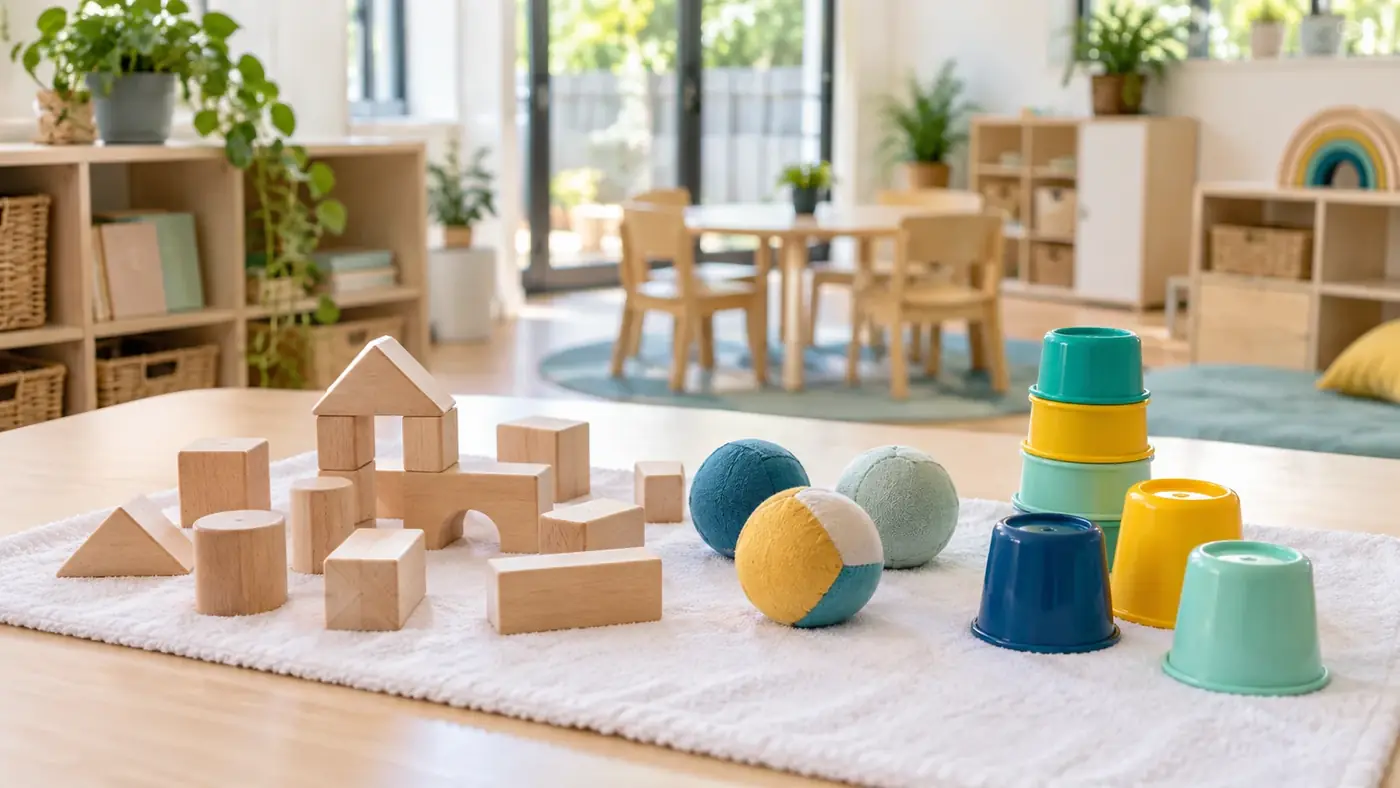
- Hard plastic
- Wood
- Fabric and soft toys
- Rubber and bath toys
- Board books
- Loose parts
- WWCC checkedAll cleaners
- Police checkedBefore any shift
- $20M insuredPublic liability
- LoggedTub and shelves recorded
How do you clean toys in childcare, material by material?
Hard plastic is washed in warm soapy water, rinsed and air-dried; wood is wiped with a damp detergent cloth and dried at once, never soaked; soft toys go through a hot machine wash. Anything that traps water inside, like squeeze bath toys, is flagged because it cannot be cleaned properly.
| Material | How we clean it | What to avoid |
|---|---|---|
| Hard plastic | Washed in warm water and detergent, rinsed, air-dried on a rack; a hot dishwasher cycle where the toy allows it | Spraying and wiping without a rinse, which leaves residue |
| Wood | Damp cloth with a little detergent, wiped with clean water, dried straight away | Soaking or the dishwasher, which swells and splits the timber |
| Fabric and soft toys | Bagged and labelled for a hot wash, then dried fully before going back | Surface sprays, which cannot reach inside the stuffing |
| Rubber and bath toys | Solid ones washed like plastic; ones with a hole reported for removal | Keeping squeeze toys that hold water and grow mould inside |
| Board books | Covers and pages wiped with a barely damp cloth, stood open to dry | Wet cloths that make pages curl and peel |
| Loose parts and natural items | Washed and dried where they can be; shells, pine cones and bark replaced when worn | Keeping natural items that crumble or go mouldy |
Electronic toys and anything with batteries are wiped with a cloth that is only just damp and never put in water. Playdough is not cleaned at all; it is thrown out and replaced on the schedule your educators set, and the tub it lives in is washed.
Our method follows the NHMRC's Staying Healthy guidelines, which favour washing with detergent and water over disinfectant for most toys. Disinfectant comes in only when a toy has been in contact with vomit, faeces or blood, or when an illness is going around the room.
How often do we sanitise toys at your centre?
It depends on whether the toy was used, not what it is. Staying Healthy asks for toys to be washed at the end of every day, especially in baby and toddler rooms, with mouthed toys set aside at once. Toys packed away and untouched can rotate weekly, and everything is done at the term break.
- After each useMouthed toys
Set aside in the tub by educators the moment a child puts one in their mouth, then washed at our visit.
- Every visitToys used that day
Everything children played with, from the favourite truck to the home corner crockery. Rooms with two sets swap them, so one set is washed while the other is out.
- Weekly rotationStored toys
Toys packed in cupboards or high shelves and not used that week, one zone each night, so nothing sits unwashed for long.
- Each term breakEverything
Every toy, box and basket emptied, washed and dried, with worn items set aside.
Illness changes the schedule straight away. When gastro, hand, foot and mouth disease or a heavy cold is in a room, every toy in that room moves to nightly cleaning with disinfectant after washing, and soft toys are packed away until the room is clear. Once the outbreak is over, the schedule goes back to normal.
The rotation is written onto the log, so a director can see which shelf was done on which night and prove that every toy was reached within the week.
Which toys are hardest to keep clean?
Toys with hollow insides, deep grooves, fabric that cannot be removed or surfaces that are painted rather than sealed. They trap moisture and grime where a cloth cannot reach, so they need replacing sooner and take longer to clean in the meantime.
- 01Hollow and squeeze toys
Water gets in through a small hole and cannot get out, so the inside grows mould long before the outside shows it.
- 02Fixed fabric and fur
Toys with fabric glued or sewn onto plastic cannot go in the wash and cannot be wiped clean, so they end up only half cleaned.
- 03Painted, unsealed wood
Paint chips and bare timber absorb saliva and moisture, which is why sealed or oiled wood lasts far better in a nursery.
None of this means a room has to be plastic. Solid, sealed wooden toys, silicone teethers, removable fabric covers and toys with smooth surfaces all clean well. When a centre is replacing resources, choosing toys that survive washing saves educator time every single day, and it makes the nightly toy clean faster and more thorough.
Some toys are simply past saving. Cracked plastic, peeling paint, split wooden toys and anything with a hole that holds water. We set these aside and list them on the log rather than returning them to the shelf.
What happens to mouthed toys?
They go into a set-aside tub the moment they leave a child's mouth, so no other child picks them up. At our visit the tub is emptied, every toy is washed, rinsed and left to air-dry on racks, and a clean set is ready on the shelf for the morning.
The simplest improvement most rooms can make is a second set of the toys babies love most. With two sets of the most mouthed toys, one is always out while the other is being washed and dried, so educators never have to choose between a clean toy and a happy baby. We can suggest which toys are worth doubling after the first week of cleaning your room.
Babies rooms need this most. Teethers, rattles, stacking cups, chunky blocks, home corner cups and board books are the usual suspects, and in a room of under-twos almost everything on the lower shelves will end up in a mouth by lunchtime. We plan the nightly wash around those toys first, then the rest of the room.
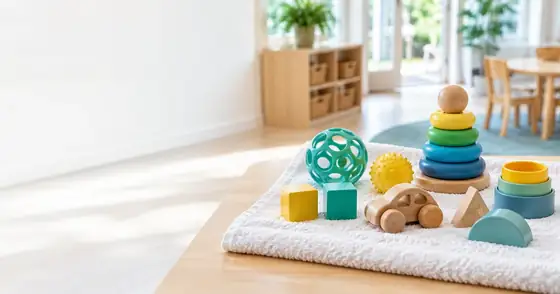
Our free guide on step-by-step guide to washing toys yourself sets out the daytime routine for your team.
We do not use sanitiser sprays or wipes on mouthed toys. They leave a residue a baby will taste, and they do not lift saliva the way washing does. A hot dishwasher cycle is fine for toys labelled as dishwasher safe, and we will load and unload one if your centre has it. Washing takes longer, so it is built into the visit time from the start.
- 1Into the tub
Educators drop the toy in as soon as it has been mouthed.
- 2Washed at night
Detergent, warm water and a brush for grooves and seams.
- 3Dried on racks
Air-dried, never towelled, then back to the shelf.
How is toy sanitisation priced?
Toy cleaning is part of your regular visit, so it is priced within the nightly scope rather than as a separate job. The number of rooms, how many toys sit on open shelves and whether you want a full toy wash each term are what change the figure.
For the full evening scope, from floors to bathrooms, see our childcare centre cleaning page. A written price comes back within 24 hours of your request, with GST listed separately. If your service is about to buy new resources, we are happy to say which ones will be easiest to keep clean.
- 1Tell us your roomsHow many, and which age groups.
- 2Rotation setWe plan which shelf is done each night.
- 3Logged nightlyTub and shelf recorded on the log.
What do educators ask about toy cleaning?
The three questions we are asked most by room leaders and directors, answered as plainly as we can.
01How often?
02Which products?
03Is it logged?
A clean set of toys on the shelf every morning.
Washed by material, rotated by use, logged every night.