
Playroom and Activity Area Cleaning
Playroom and activity area cleaning for centres, kinders and daycare rooms across Melbourne, done after close so every room is ready the moment the first family arrives. Tables, chairs, shelves, touch points and floors are cleaned each visit, art and messy play areas are cleared, and everything is put back the way your educators set it up. Playrooms are one part of our room-by-room cleaning guide.
A playroom is where children spend most of their day, which means it is also where most of the day's mess ends up: crumbs from morning tea, paint from the easel, sand from outside and a fine film of fingerprints on everything at knee height.
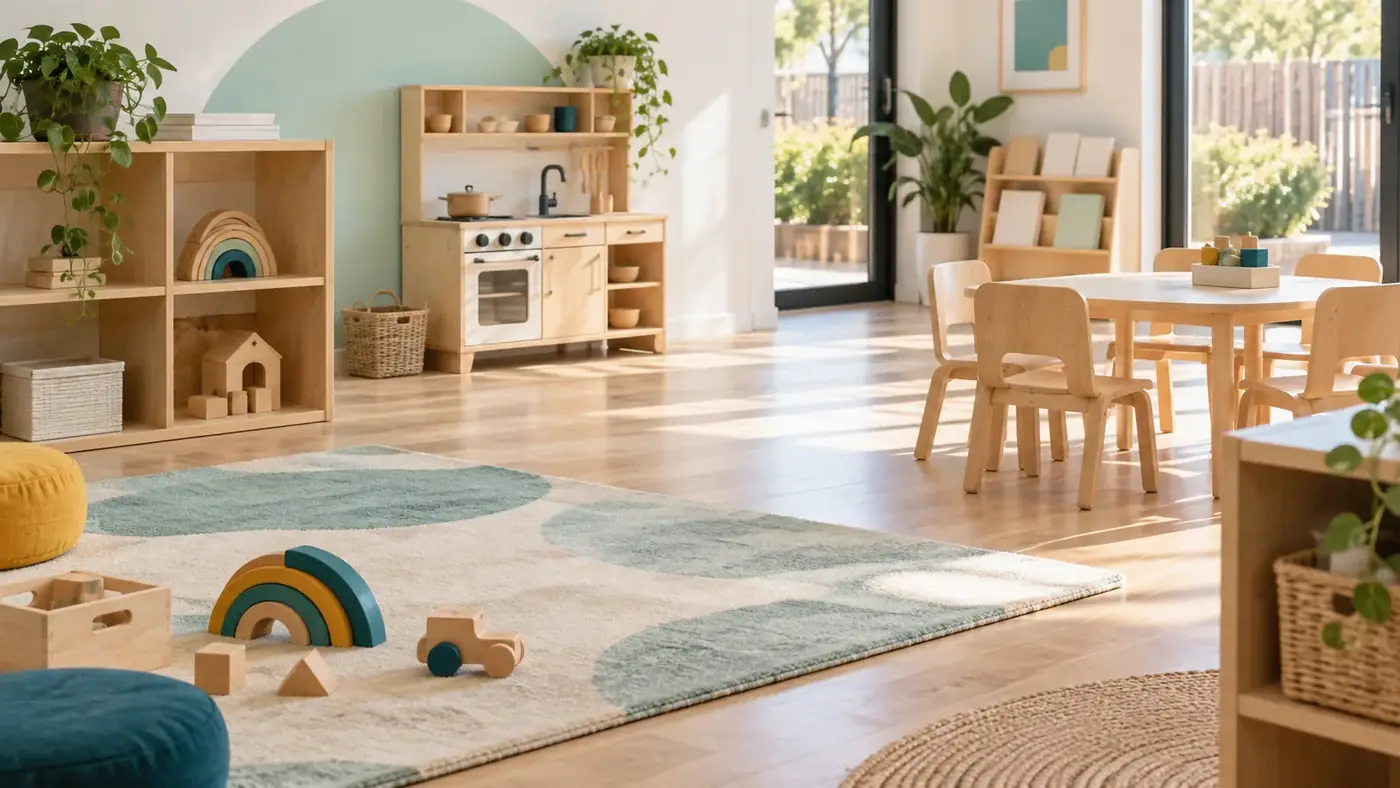
- Tables clean and dry
- Floors dry, rugs vacuumed
- Shelves back as set
- Bins empty
- Handles and switches done
- WWCC checkedEveryone who enters
- Police checkedBefore the first key
- $20M insuredPublic liability
- LoggedRoom by room
What does a clean playroom look like at 7 am?
Good playroom cleaning leaves tables and chairs clean and dry, floors dry and free of crumbs, touch points wiped, bins empty, and every shelf and resource exactly where the educators left it. A clean playroom should feel ready to use, not rearranged, and it should not smell of cleaning products.
That last point matters more than it sounds. A heavy fragrance in the morning usually means a product was sprayed to cover something rather than to clean it, and children with asthma or sensitive skin notice it first. Our playroom clean relies on neutral detergent and water, and the room smells of nothing in particular, which is exactly how it should be.
- Meal and craft tables
Tops, edges and the lip underneath where food and playdough gather, washed and dried.
- Art and messy play
Paint pots, easels, the messy play tray and the floor around them cleared and wiped.
- Home corner
Play kitchen, cups and plates washed, dress-ups hung, the corner reset.
- Block and construction
Shelves wiped around the blocks, floor under the mat vacuumed.
- Book and quiet corner
Cushions shaken out, book covers wiped, the rug vacuumed.
- Sensory and water play
Tubs emptied and dried so nothing is left standing overnight.
Activity areas change with the program, so our scope moves with the room instead of sticking to a fixed list. If an educator sets up a new provocation or an outdoor-inside day, we clean around it and leave a note on the log rather than tidying it away, because a cleaner should never undo a teacher's work.
How do you clean tables and chairs in childcare?
Wash with warm water and detergent, rinse with clean water and let them dry. That simple routine, done thoroughly, removes most germs from a table; disinfectant is only needed when a table has had vomit, faeces or blood on it, or when a bug is working its way through the room.
At night we clean every part of the table, not just the top. The edges children grip, the lip underneath where food and playdough collect, and the legs at toddler height all get the cloth, and chair seats, backs and the rungs children hold are done the same way. Stacked chairs are wiped before they are stacked, not after.
Crayon, dried paint, glue and playdough are lifted with a plastic scraper and warm water rather than a harsh solvent, so nothing sticky or chemical is left on a surface children will eat from the next day. Tables with laminate chips or split edges are noted on the log, because a damaged surface cannot be cleaned properly.
Highchairs and low benches used for meals are treated as tables, and so are the tops of low shelves where children lean, rest their hands and sometimes put down food. Anything a child eats from or near gets the full wash, rinse and dry, while shelving further from the eating area is done on the weekly rotation.
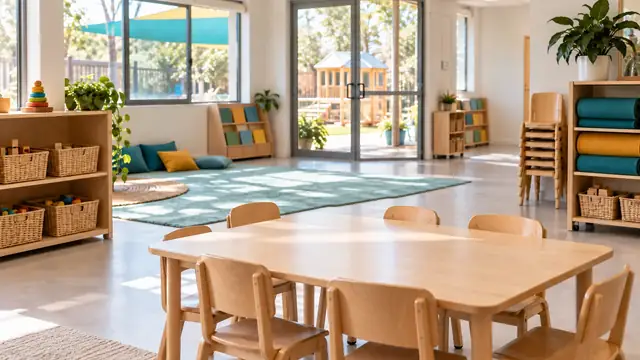
- Clear crumbs into a bin, not the floor
- Wipe with detergent and warm water
- Rinse cloth, wipe again with clean water
- Let the table air-dry before food goes on
- Use a cloth kept only for tables
A simple factsheet for educators; we can print one for each room.
The NHMRC's Staying Healthy guidelines set out when tables need cleaning during the day. Educators wipe them before and after every meal; our evening clean is the thorough reset that daytime wiping cannot be.
How are art and messy play areas cleaned?
Paint, glue, clay and slime are cleared while they are still soft where possible, easels and trays are washed and dried, and the floor around the art area gets its own clean before the rest of the room. Children's artwork that is drying is never moved or thrown out.
- 01Paint and glue
Water-based paint lifts with warm water; dried glue and PVA are softened first, then scraped, never scrubbed into the table surface.
- 02Playdough and clay
Crumbs are swept up before mopping, because wet playdough smears and sticks to the floor far worse than dry.
- 03Sensory tubs
Water, rice, sand and slime tubs are emptied into the right bin and dried, so nothing sits wet overnight and starts to smell.
Art rooms are where cleaners most often get it wrong by being too tidy. Paintings pegged to dry, clay models left to set and collage in progress all look like mess to someone who was not there during the day. Our rule is simple: if children made it, it stays exactly where it is, and we clean around it. If the floor under a drying rack needs cleaning, the rack is lifted, not emptied.
What is the cleaning procedure for playroom floors?
Pick up, vacuum, then mop. Loose items and toys are lifted first, carpets and rugs are vacuumed in two directions, and hard floors are swept and mopped with a pH-neutral cleaner from the back of the room to the door. Floors are always the last job, so nothing is walked back over them.
| Floor | Every visit | Less often |
|---|---|---|
| Vinyl and lino | Swept, mopped with a neutral cleaner, edges and corners by hand | Machine scrubbed each term break |
| Carpet and rugs | Vacuumed in two directions, spills spot-treated | Hot-water extraction each term break |
| Foam play mats | Wiped with detergent and dried | Lifted and the floor underneath cleaned weekly |
| Timber | Dry mopped, then damp mopped with minimal water | Checked for splinters and lifting boards |
| Entry mats | Vacuumed and shaken out | Washed or swapped monthly |
- FirstPick up
Toys, pencils and loose parts off the floor and back to their homes.
- SecondVacuum
Rugs and carpet, then along skirting and under furniture edges.
- ThirdMop
Hard floors from the back wall towards the door.
- LastDry check
No wet patches left where a child might slip at drop-off.
Glitter, sand and playdough are the three things that make playroom floors hard. Glitter is vacuumed rather than mopped, because water spreads it; sand is swept before any vacuum touches it, to save the machine; and dried playdough is scraped up before mopping so it does not smear. Babies rooms get extra care, because infants spend their day on the floor, so rugs there are vacuumed slowly and mats are wiped on both sides.
How are playrooms priced?
By the number of rooms, their floor types and how much furniture and resources each holds, as part of the full evening clean. Send your room count and the main floor type in each, and the written price, fixed, reaches you inside 24 hours.
Playrooms sit alongside the bathrooms, kitchen and sleep rooms in the nightly scope, described in full on the childcare centre cleaning page. Mostly carpeted rooms take a little longer each night than hard-floored ones, and the quote shows the difference.
- 1Room countPlayrooms and their floor types.
- 2Walk-throughWe note each room's set-up to respect it.
- 3First nightRooms reset and logged by morning.
What do room leaders ask about playroom cleaning?
The three questions room leaders raise most, usually in the first week of a new cleaner. Anything unusual about a room, such as a heritage floor or a shared hall, is best raised before the first night.
01How often?
02Which products?
03Is it logged?
Playrooms ready before the first family walks in.
Every table, every floor, every shelf back where it belongs.