
Nappy Change and Bathroom Cleaning
This page sets out how we clean the nappy change area in childcare centres, along with the toilets, potties and basins children use every day. It is written for directors checking what a cleaner actually does in the room that matters most. Everything is washed with detergent first, then disinfected with a TGA-listed product and left for its full contact time, and each step goes on the log. The other rooms we look after are covered on our guide to every area we clean.
Get this room right and most of the illness risk in a centre is under control. Get it wrong and nothing else you clean will make up for it.
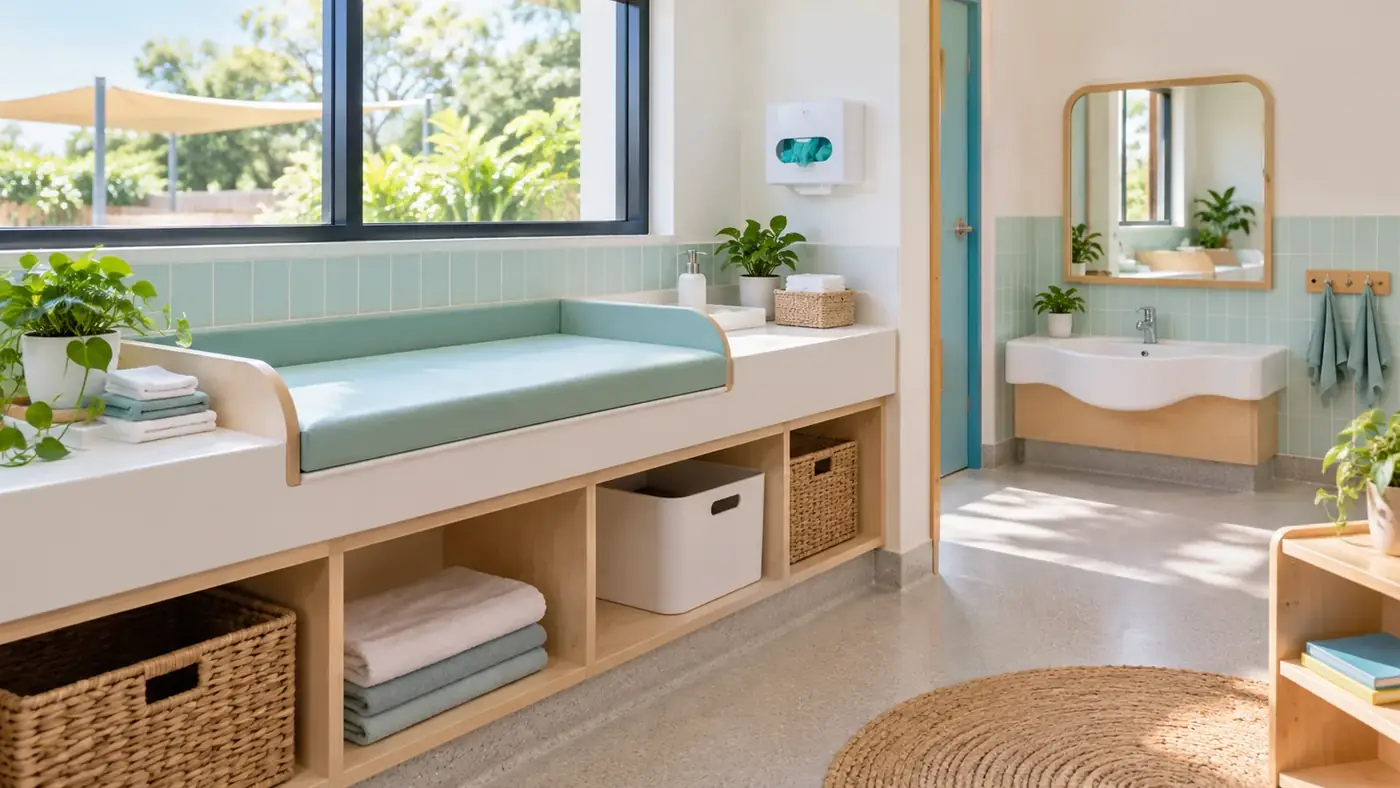
- Change bench and matDisinfected
- Toilets and pottiesDisinfected
- Basins and tapsDisinfected
- Floor and floor wasteDisinfected
- WWCC checkedEvery cleaner on your roster
- Police checkedBefore the first shift
- $20M insuredPublic liability
- LoggedEach fixture on its own line
Why is the nappy change area the highest-risk zone?
Because it is where faeces, urine and hands meet many times a day, and the germs behind most childcare outbreaks travel that way. Gastro viruses and hand, foot and mouth disease both spread from the gut to hands to surfaces, so a change bench left dirty can pass an illness through a whole room.
A single nursery room can see dozens of nappy changes in one day, each one a chance for a little contamination to land on the mat, the bench edge, the tap handle or the lid of the nappy bin. An educator's wipe-down between changes keeps that in check during the day. Our clean at night resets everything, including the parts a quick wipe never reaches.
The toilets and hand basins that toddlers and preschoolers use carry the same risk in a different form. Children are still learning to wipe, flush and wash properly, so seats, flush buttons, the underside of basins and the floor around the toilet all need the same care as the change bench.
That is why this room comes last on our nightly route, once the cleaner rooms are finished, with its own colour of cloth and mop, and why nothing used here is ever carried into a playroom or the kitchen afterwards.
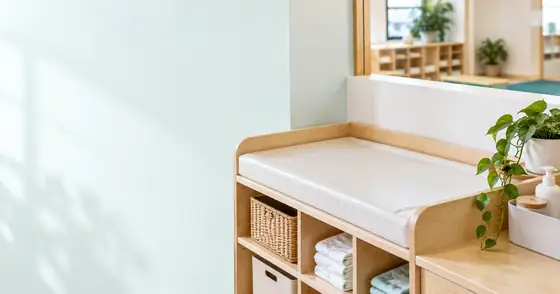
- The front edge of the change bench
- Step or ladder up to the bench
- Nappy bin lid and pedal
- Tap handles and the soap pump
- Toilet flush buttons at child height
- Floor waste and grout around toilets
We clean the change area from the highest surface to the lowest and from the cleanest fixture to the dirtiest, so nothing already disinfected is splashed or touched again before we leave the room.
What is our cleaning procedure for the nappy change area?
Clean first, then disinfect, then let the disinfectant work. Every surface in the change area is washed with detergent and warm water to remove soiling, rinsed, and only then treated with a TGA-listed disinfectant that is kept wet on the surface for the full time its label specifies.
- 1Gloves and colour
Fresh gloves, and the cloths and mop reserved for this room only.
- 2Clear and empty
Nappy bins emptied and relined, used paper and wipes removed.
- 3Detergent wash
Mat, bench, edges, step, taps and bin lid washed with detergent and warm water.
- 4Rinse and dry
Detergent rinsed off so it does not weaken the disinfectant.
- 5Disinfect
A TGA-listed disinfectant applied to every surface in the zone.
Dwell time kept - 6Toilets and potties
Seats, bowls, flush buttons and potties, same two-stage method.
- 7Floor last
Floor and floor waste mopped towards the door, then disinfected.
- 8Restock and log
Gloves, paper and soap refilled from your stock, every step logged.
The contact time, sometimes called dwell time, is the part most often skipped. A disinfectant that is sprayed on and wiped straight off has not had time to work, whatever the label claims. Every product we use shows its contact time, and the log records which product went on and how long it was left.
The disinfectants we rely on here are hospital-grade products listed on the ARTG, the national register the TGA runs, and each label shows its listing number. We give you that number, the product name and its safety data sheet for your chemical register, so the product in your change room is never a mystery. If a product is changed, the register is updated before it is used on site, not after.
What do educators do between changes, and what do we do?
Educators clean the change mat after every change, following the procedure in the NHMRC's Staying Healthy guidelines. We do the full reset once children have gone: every surface in the room, the toilets, the floor and the bins, with a signed log that shows how it was done.
- Paper on the mat before the change
- Mat cleaned once the child is lifted off
- Soiled items bagged straight away
- Hands washed after every change
- Spills reported for the evening log
- Full detergent wash of every surface
- Disinfectant left for its contact time
- Toilets, potties, basins and taps
- Floor and floor waste disinfected
- Bins emptied, stock refilled, log signed
The two halves need each other. Without the educators' wipe-down, the mat builds up contamination through the day; without the evening clean, the edges, step, bin and floor never get properly done. The step-by-step routine your team can pin to the wall is in our nappy change and bathroom cleaning procedure guide, which follows the Staying Healthy guidelines.
How are toileting areas in childcare cleaned?
Toilets, potties, basins and the floor around them are cleaned with the same two-stage method as the change bench, working from the cleanest fixture to the dirtiest. Child-height taps, flush buttons and door handles are done at every visit, because small hands touch them before they are washed.
Our bathroom cleaning procedure in childcare starts at the basins and mirrors, moves to the outside of the toilets and the partitions, then the seats and bowls, and finishes with the floor and the floor waste. Potties are emptied, washed in the dedicated sink and disinfected, then left upside down to dry. Step stools and toilet trainer seats are cleaned the same way, because children stand on them in shoes and then sit on them bare.
Once a week, grout lines, skirting and the back of the toilet pedestal get extra time, and the term break is when tiles are washed from top to bottom. If a bathroom has a persistent smell, the floor waste is usually the cause, and we flush and treat it rather than masking it with fragrance.
| Fixture | How often |
|---|---|
| Change bench and mat | Every visit |
| Toilets and potties | Every visit |
| Basins, taps, soap pumps | Every visit |
| Floor and floor waste | Every visit |
| Potties and trainer seats | Every visit |
| Nappy bins and lids | Every visit |
| Grout, skirting, pedestals | Weekly |
| Walls and partitions | Term break |
The table above is the short version. Ask for your own room-by-room checklist with the quote and we will set it up for your bathrooms, fixtures and opening hours. It can be printed and kept inside the bathroom door for educators.
How do we quote nappy change and bathroom cleaning?
It is quoted as part of your centre's regular clean rather than on its own, because a change room is never cleaned in isolation. Tell us how many change areas and bathrooms you have, and the written price comes back within 24 hours.
The nightly scope for the rest of the building is described on our childcare centre cleaning page. If your centre has had repeated gastro cases, mention it, and we will look at whether a second clean of the change area during the day would help.
- 1Count the wet areasChange benches, toilets and basins.
- 2Products agreedNames and contact times for your register.
- 3First clean loggedEach fixture on its own line.
What do directors ask about change rooms?
Three short answers about the room directors worry about most. If your question is about a particular illness, our outbreak cleaning page goes into more detail.
01How often?
02Which products?
03Is it logged?
The room that matters most, cleaned properly every night.
Detergent, disinfectant, contact time and a signed log.