
Childcare Kitchen Cleaning
Childcare kitchen cleaning in Melbourne for centres that cook meals, warm bottles and serve snacks to young children every day. Benches, appliances, sinks, utensils and floors get food-contact products and nothing else, in the order your food safety program sets, and every visit is logged. The kitchen is one of the high-risk rooms on our room-by-room cleaning guide, and it is treated as its own zone with its own cloths.
A childcare kitchen is not a restaurant kitchen. The people eating are the most vulnerable diners there are, the menu often includes purees and formula, and the room is inspected by council as well as assessed under the national framework.
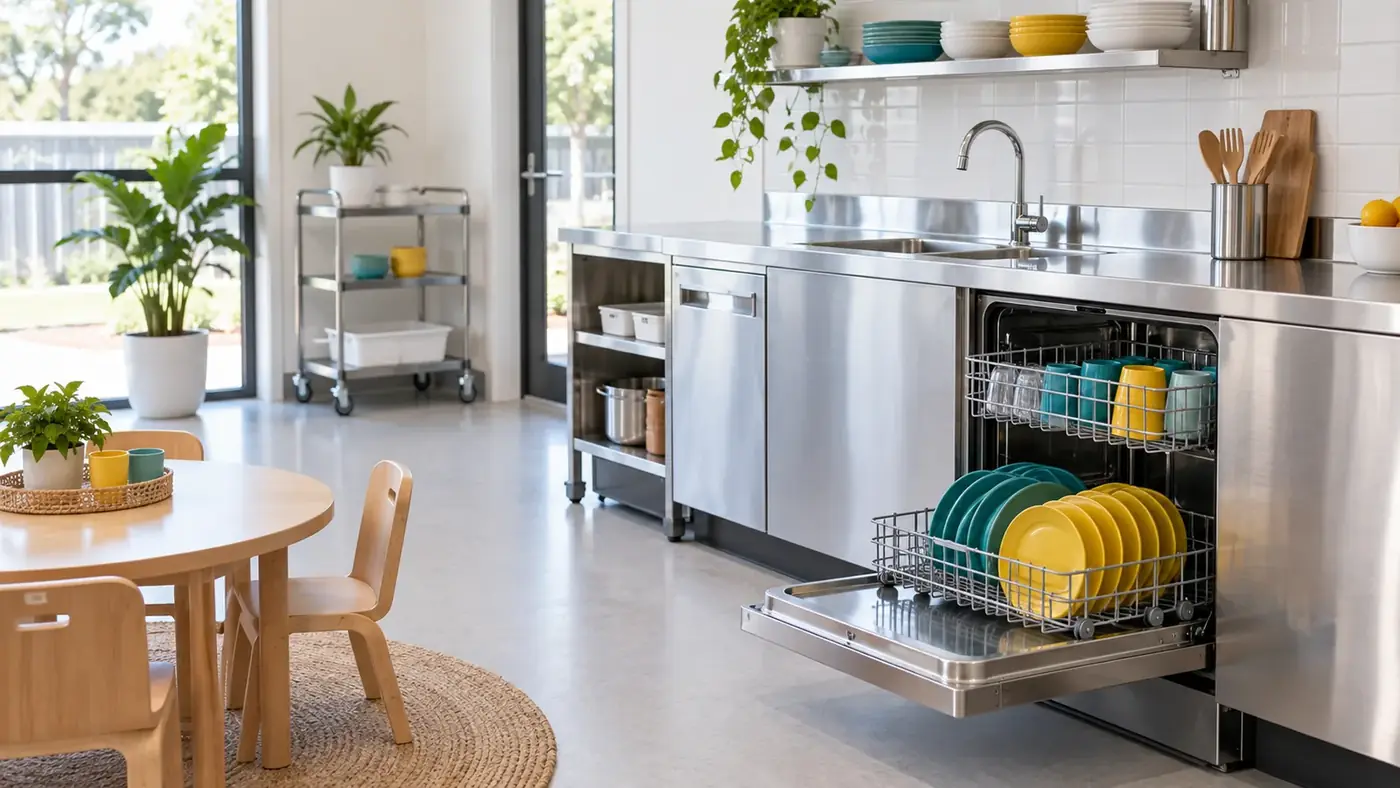
- Green cloths only
- Food-grade sanitiser
- No bathroom products
- Cleaned after service ends
- WWCC checkedAll kitchen cleaners
- Police checkedBefore rostering
- $20M insuredPublic liability
- LoggedReady for council visits
What makes childcare kitchen cleaning food-safe?
Three things: products approved for food contact surfaces, cloths and equipment that never leave the kitchen, and a method that follows your centre's own food safety program. Food-safe cleaning also means working only after service has finished, so no food is prepared while benches are wet.
- Food-contact products
Detergent and a food-grade sanitiser on anything that touches food, rinsed where the label says so. The bathroom disinfectant never enters the kitchen.
- Kitchen-only equipment
Green cloths, a dedicated mop and bucket, and gloves changed on the way in, so nothing from another room reaches a food surface.
- Your program, not ours
The order, products and frequencies in your food safety program are the ones we follow, and the log is laid out to match it.
In Victoria, a centre that prepares or serves higher-risk food for children is a class 1 food premises under the Food Act 1984, the same category as hospitals and aged care. That brings a food safety supervisor, a documented program and council inspections. The classification is explained on the Department of Health's food business classifications page, and family day care is treated separately.
Cleaning is where kitchens most often fall down at inspection, not cooking. Grease behind the fridge, a mouldy dishwasher seal or a rangehood filter caked in fat are the details an inspector notices first, and they are exactly the jobs a cook has no time for at the end of a shift. That is the gap our evening clean fills.
How are food preparation areas in childcare cleaned?
Food preparation areas are cleared, washed with hot water and detergent, rinsed, then sanitised with a food-grade product and left to air-dry. Appliances are cleaned outside every visit and inside on a rotation, and the floor and drains are done last with the kitchen mop.
| Item | Method | How often |
|---|---|---|
| Benches and splashbacks | Wash, rinse, food-grade sanitiser, air-dry | Every visit |
| Sinks and taps | Scrubbed, rinsed, sanitised, drain strainer emptied | Every visit |
| Fridge and freezer | Handles and seals every visit; shelves once emptied by your cook | Outside nightly, inside weekly |
| Microwave, oven, cooktop | Degreased and wiped, oven interior on rotation | Nightly outside, weekly inside |
| Dishwasher | Filters, seals and door edges cleaned | Weekly |
| Rangehood and filters | Filters degreased or swapped | Monthly, or as your program sets |
| High chair trays and straps | Washed, rinsed, sanitised, dried | Every visit |
| Bins, floor and drains | Bins washed, floor scrubbed, floor waste flushed | Every visit |
We never move food. If the fridge needs cleaning inside, your cook or director empties it or tells us which shelf is clear, and anything past its date is left for them to decide on. The same goes for the pantry: shelves are wiped around the stock, not through it.
Bottle preparation benches get their own line on the log. Where a centre prepares formula, the bench, kettle exterior and steriliser area are cleaned with food-safe products, and the bottles themselves stay with your educators, who follow the centre's own procedure for them. Infant formula tins and scoops are never moved or wiped by us; if a tin is left open on the bench, it goes on the log so the room leader can deal with it in the morning.
How should utensils and crockery be cleaned in childcare?
Through a commercial dishwasher where the centre has one, because its hot rinse sanitises as well as cleans. Where washing is done by hand, utensils and crockery are washed in hot soapy water, rinsed, sanitised and left to air-dry on a rack, never dried with a tea towel.
- Step 1Wash
Hot water and detergent to lift food and grease.
- Step 2Rinse
Clean water to take the detergent off.
- Step 3Sanitise and dry
Heat or a food-grade sanitiser, then air-dry.
During the day, washing up belongs to your cook and educators. What we add at night is the part the day never gets to: descaling the dishwasher and cleaning its filters, scrubbing out the sinks and drying racks, wiping the insides of cupboards where crockery is stored, and making sure the utensil drawers are free of crumbs and grease.
Children's cups, plates and bowls are often melamine or plastic, which scratch and hold stains. If a set has become hard to clean, we will say so on the log, because a scratched plate can harbour food residue no dishwasher will shift.
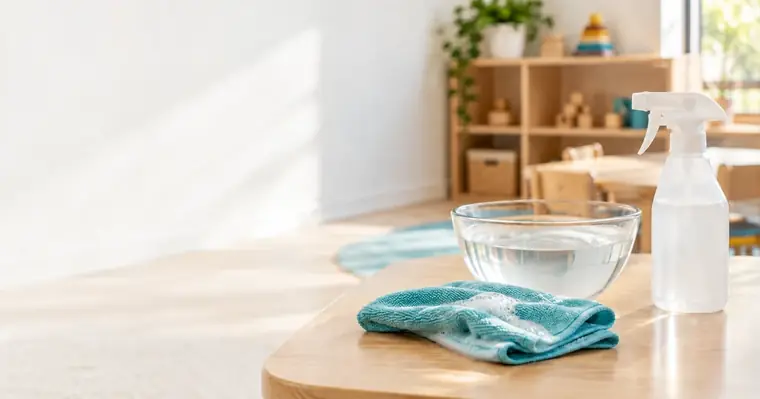
- Bathroom disinfectants and cloths
- Scented sprays and air fresheners
- The playroom and bathroom mops
- Any product without a safety data sheet
- Cleaning while food is being prepared
Book an extra kitchen clean the week before. We concentrate on behind appliances, seals, filters and drains, and the log from that visit shows exactly what was done.
The bench, kettle and steriliser surrounds are cleaned with food-safe products every visit and kept apart from the main prep area, because infants are the most vulnerable people the kitchen feeds.
What does an inspector notice first in a childcare kitchen?
The places nobody looks during a busy day: grease behind and under appliances, the rubber seals on fridges and dishwashers, the inside of the rangehood, and any sign of pests. A kitchen can look clean from the doorway and still fail on those four.
- 01Grease you cannot see
Fat settles on the wall behind the cooktop, the sides of the oven and the top of the fridge, and it collects dust until it turns into a sticky film.
- 02Seals and gaskets
Fridge and dishwasher seals trap moisture and food, and black mould grows in the folds. They are cleaned weekly and flagged if they are split.
- 03Signs of pests
Crumbs under the dishwasher and behind the bins feed pests. We clean those spots and report any droppings straight away, so pest control can be called.
None of these is a cleaning failure on the cook's part. Cooks clean as they go and finish the day's washing up; what they cannot do is pull out the fridge at 5 pm. Splitting the work that way, daily cleaning by the kitchen team and the hidden jobs by us, is what keeps a kitchen ready for an unannounced visit.
How is kitchen cleaning quoted?
As part of your centre's evening clean, sized to the kitchen you have: a snack kitchenette takes minutes, a full commercial kitchen with a cook on staff takes much longer. Send a description or a photo of the kitchen and a fixed written price comes back within 24 hours. Kitchens that are only used for snacks and bottles cost far less to clean properly than most directors expect.
If you have a copy of your food safety program, include the cleaning schedule page and we will quote against it line by line. How the kitchen fits into the whole night is set out on our childcare centre cleaning page.
- 1Describe the kitchenKitchenette or full commercial kitchen.
- 2Match your programProducts and frequencies agreed in writing.
- 3Logged nightlyReady for the next council inspection.
What do cooks and directors ask about the kitchen?
Short answers to the three questions that come up whenever a kitchen is part of the scope. Your food safety supervisor may have more; send them with the quote request.
01How often?
02Which products?
03Is it logged?
A kitchen ready for tomorrow's cook and the next inspection.
Food-safe products, your program's order, a signed log every night.